AMB 2026: Collaborative processes drive automation
Spotlight on automation: Patrick Schwarzkopf (VDMA) on collaborative processes, AI and SME automation with No-Code
When manufacturing companies look to make their processes more efficient and flexible, their focus turns to automation solutions – particularly when work involves an increasing collaboration of man and machine. AMB 2026 will be actively exploring this focus topic and demonstrating how collaborative processes are developing in machining production. In our interview with Patrick Schwarzkopf, Managing Director of the VDMA Robotics + Automation Association, he addresses the current key drivers and shares his thoughts on the developments businesses now need to keep an eye on.
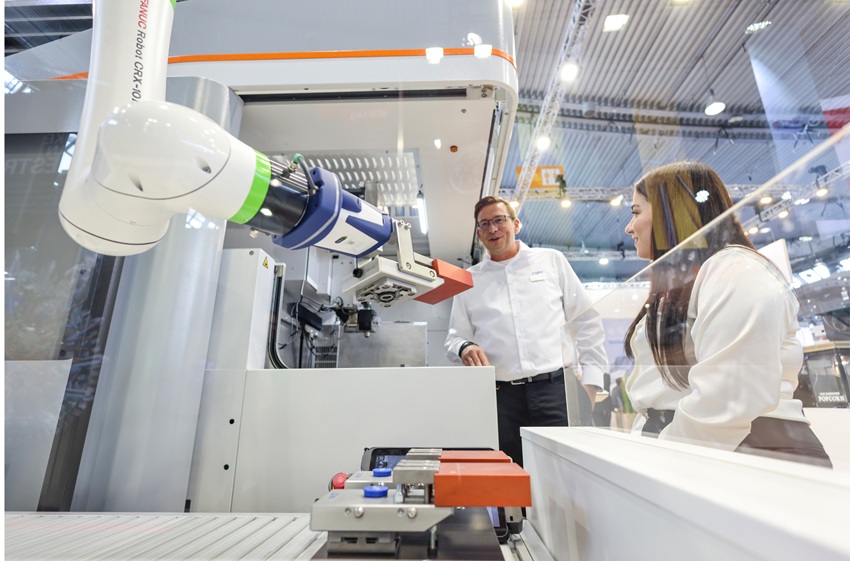
Automation as one of the three key themes: Collaborative processes are gaining significance
AMB: The robotics and automation industry is expecting a 5 percent drop in turnover in 2026 – and yet manufacturing companies are still feeling the pressure to automate. Why is now the right time for collaborative processes, and what is driving businesses to take this step?
Patrick Schwarzkopf: We are indeed seeing a clear reluctance to invest – for a number of reasons, such as geopolitical turbulence or the more familiar regional factors. And yet, despite this, the trend for automation is still going strong. Demographic change will be further exacerbated in the coming years and we need to automate operations in order to support the remaining skilled employees. This is the only way to remain competitive. The interaction between man and machine will be crucial. The rapid development of artificial intelligence (AI), particularly the generative and “physical” AI, is opening up new opportunities, such as through the use of Agentic AI systems or the significantly simpler operation and programming of automation solutions.
AMB: When it comes to automation, the focus was always on large-scale production; these days robotic solutions are also a realistic alternative for small batch production. How far has this development come and what does a smaller company specifically need in order to implement automated processes?
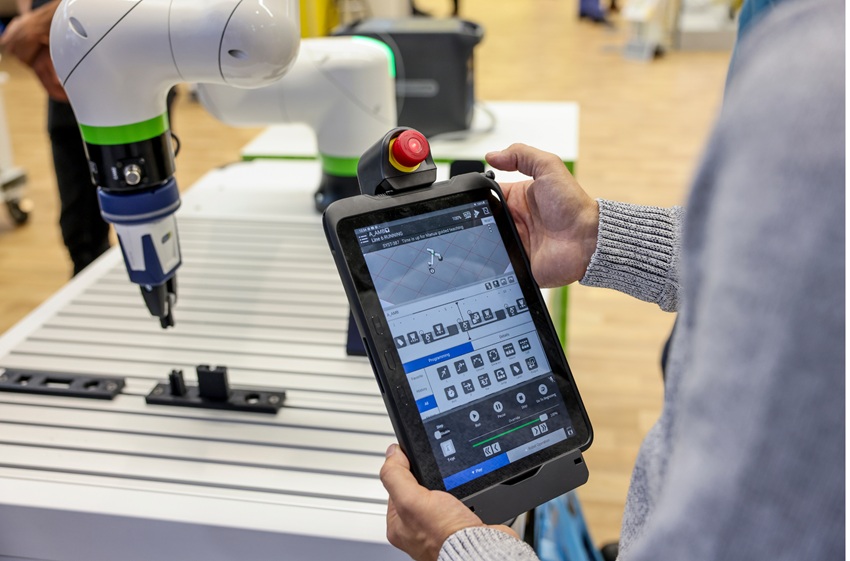
Patrick Schwarzkopf: Automation is currently making great strides in the small and medium-sized enterprises. There have been major technological developments in recent years, and this significantly lowered the entry barrier for SMEs. The “low volume, high mix” scenarios are typical: employees need to be able to program quickly, simply and without major effort. There are currently plenty of No-Code approaches available for this, which require no previous knowledge of programming languages. Automation processes can be created using the drag-and-drop function of a graphical user interface. Robot paths can be taught by demonstration and saved at the touch of a button. The big manufacturers have long offered suitable solutions tailored to SMEs. Pragmatic setups will often suffice – for example, when productivity leaps due to robots working overnight. The hurdle is often less to do with technology and more with the expectation that automation is fundamentally too complicated or too expensive. This falls short of the mark, because the solutions are there – and clear to see at trade fairs such as AMB. Guidance is provided here by Go4Robotics, for example, an online platform of the International Federation of Robotics (IFR).
AMB: If programming and operation are becoming simpler, then we are also closer to a direct collaboration between man and machine. Humans and robots are increasingly working side by side without any safety fence – feasible only through the use of AI-supported sensors. What has specifically changed on the shop floor and how do businesses need to rethink processes and personnel?
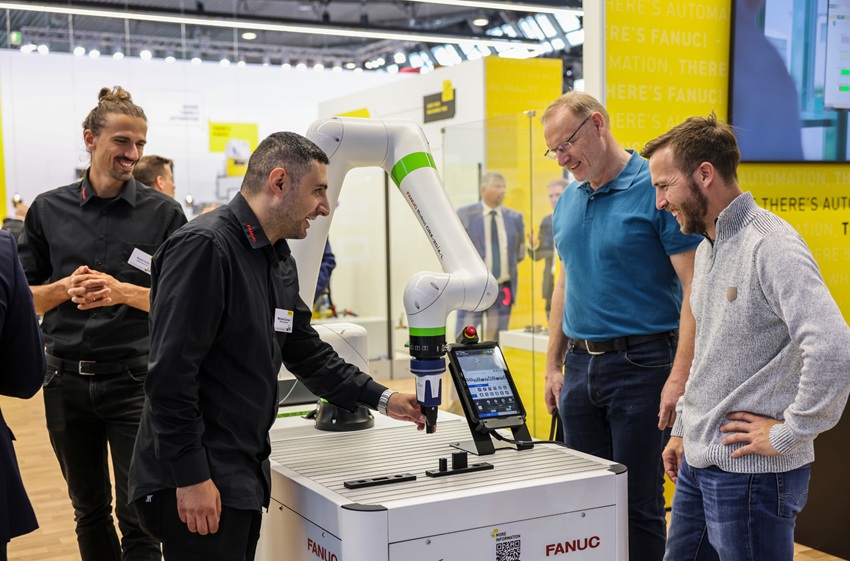
Patrick Schwarzkopf: Collaborative robots or “Cobots” are already well established. In many applications, however, it is more of a “co-existence”, working together without safety fences and therefore a genuine, direct interaction. A new level of close collaboration can currently be seen in humanoid robotics. AI is making great strides here: we’re talking about interpretation of the environment and appropriate, independent operation. There is still plenty of research needed, and yet humanoid robots are increasingly leaving the research laboratories for initial test applications in the industry. There’s still a long way to go before it’s ready for application across the board – at the same time, though, humanoid robotics is facilitating a closer interaction between man and machine, such as through the opportunity to talk to robots.
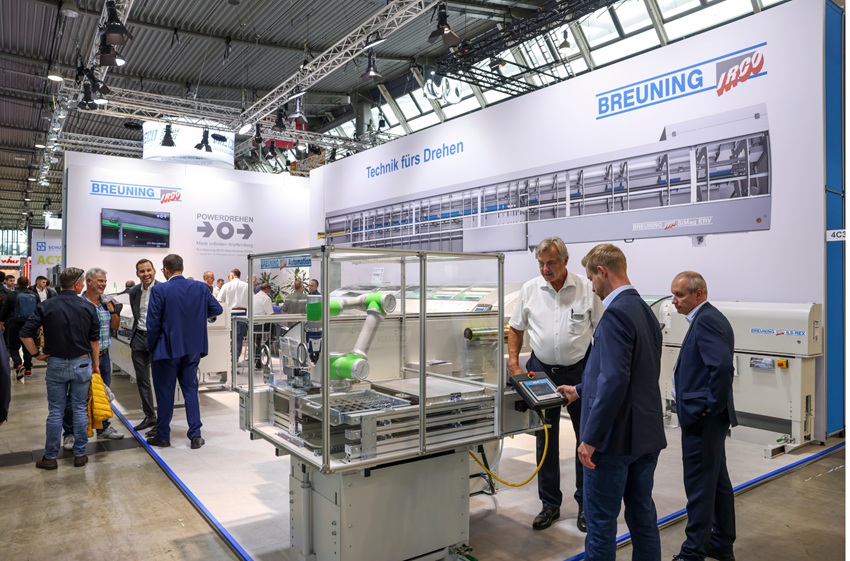
AMB: Many of these developments are best evaluated live. AMB will be combining the entire spectrum of metal cutting under one roof this September in Stuttgart – from manufacturers and users to those involved in research. What can this unique constellation do to promote collaborative automation on a wider scale – and why is a visit to AMB indispensable for anyone involved in metal cutting and thinking about automation?
Patrick Schwarzkopf: Taking a look at the figures, the relevance of this event is clear: according to the IFR, “machine tending” – i.e. the automated insertion and removal of parts at processing machines – is one of the main applications of robotics. Within a decade, the number of new robots installed annually for handling applications at machine tools increased from 14,500 units (2015) to 19,000 units (2024). For 2025, preliminary IFR figures are indicating further growth in the double-digit percentage range. The use of Cobots has also increased significantly in recent years: in 2024, there were around 65,000 collaborative robots installed around the world – this corresponds to 12 percent of all industrial robots. The largest growth can be seen in the mobile robotics facilitating the flexible networking of machinery – via mobile manipulators, for example, which are mobile platforms with a robotic arm. There is hardly an event that can top the trade fair when it comes to receiving such a compact, industry-specific overview: visitors have the chance to experience automation for the metal cutting industry first-hand at AMB.
AMB: Thank you for talking to us, Mr. Schwarzkopf.

Focus on automation at AMB 2026 in the Oskar Lapp Halle (Hall 6)
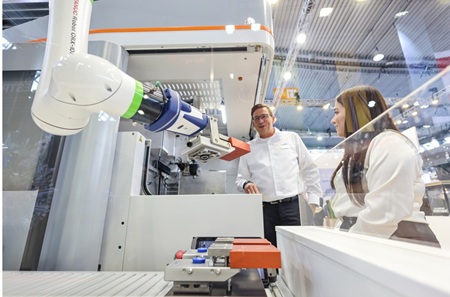
Automation will be on display in nearly all the halls of AMB 2026 – from manufacturers of machine tools with automation systems to solutions for tool and clamping technology, for example for automated machine setup. The spotlight will be on “Automation and Handling Technology” in the Oskar Lapp Halle (Hall 6). Here, exhibitors such as FANUC, KUKA, Cellro, RoboJob, Wassermann Technologie and many more will be demonstrating their latest solutions for production and process management. The remaining list of participants in the Exhibitor Directory is just as impressive, with visitors promised insights into how robotics, collaborative automation, Industry 4.0 concepts and IIoT are shaping the machining process and inspiring new approaches.
About AMB
AMB has presented the highlights of the international metal working industry since 1982. An event “Where metal comes alive”, AMB will also be a fixed date in this year’s calendar, taking place from 15 to 19 September 2026. AMB is the marketplace and meeting point for the metal cutting industry where the latest products, technologies, innovations, services and concepts are presented in all their forms. AMB is supported by the VDMA Precision Tools Association, the VDMA Software and Digitalisation Association and the German Machine Tool Builders’ Association (VDW).
Further information can be found online at www.amb-messe.de/